
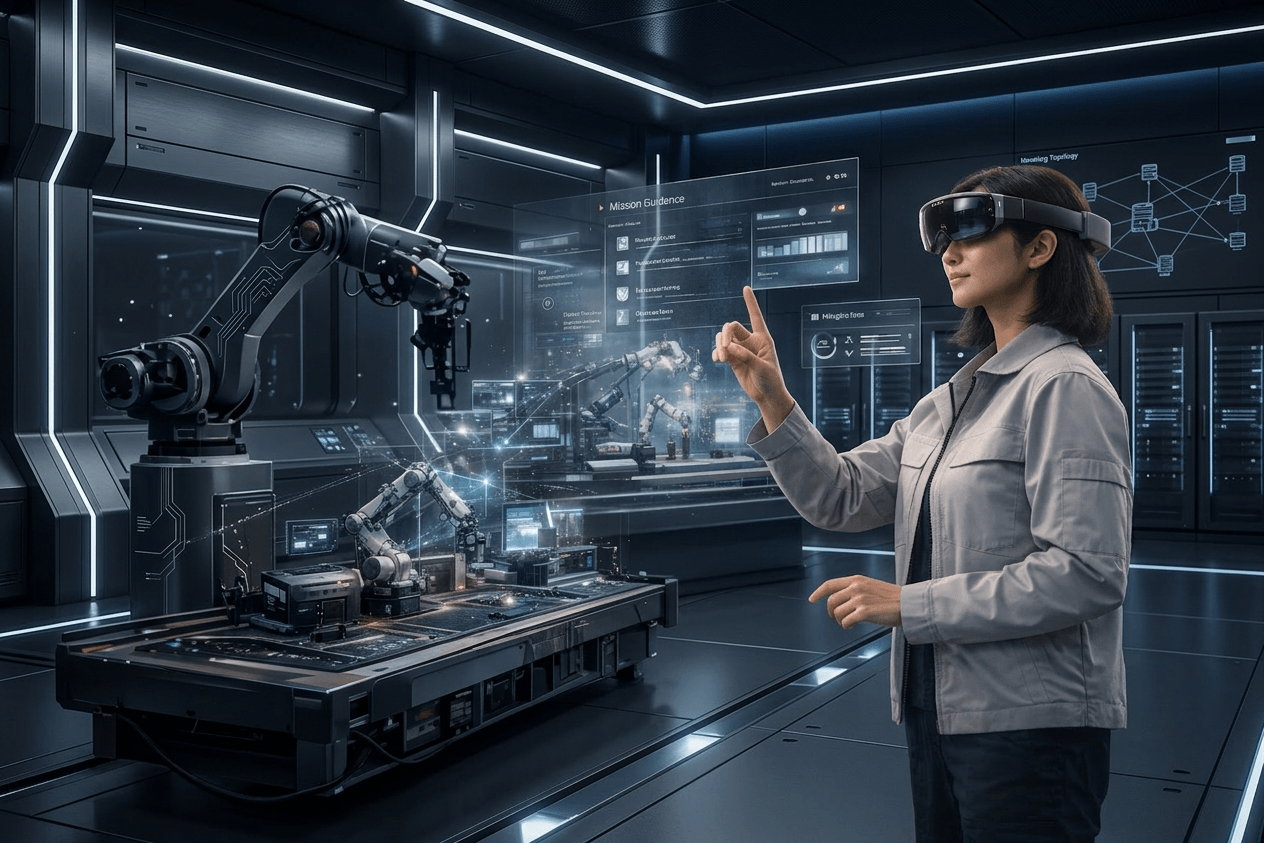
Human-AI Collaboration
Where people and AI work as one system
Aedu integrates people, AI agents, and real operational environments into a unified system where they can learn, decide, and act together — optimizing complex operations with greater intelligence and speed.
Training · Operations · Safety · Complex Decision-Making
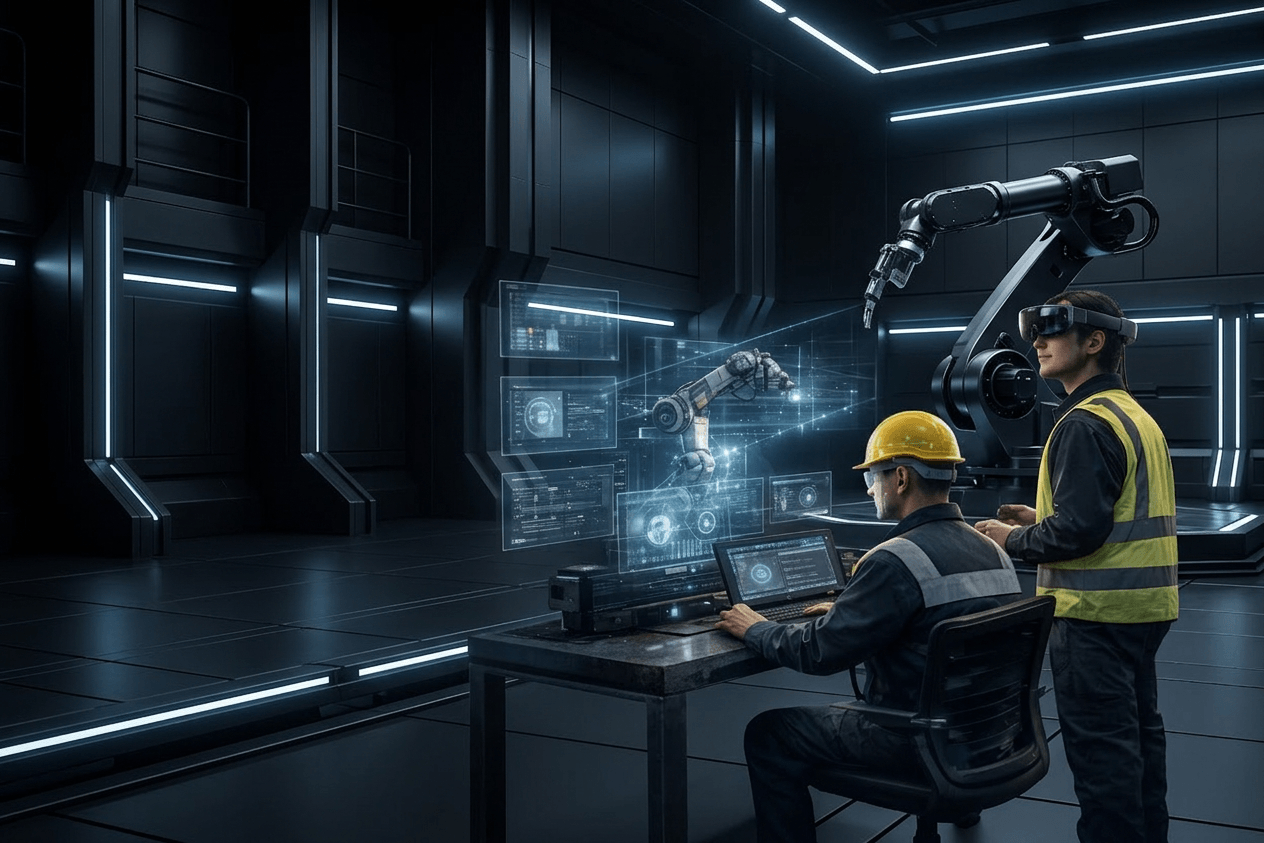
The Challenge of Human-AI Collaboration
Integrating AI into real-world operations introduces new layers of complexity that traditional systems were never designed to handle.

Fragmented System Information Silos
Most systems fail to provide realistic environments where humans and AI can safely learn and interact.

Information Silos
Disjointed, non-integrated systems lead to inefficiencies and siloed information.

Human-AI Misalignment
Without shared context, human decisions and AI outputs often diverge, leading to inefficiencies and risk.

High Operational Complexity
As systems scale, managing interactions between people, machines, and AI becomes increasingly difficult.

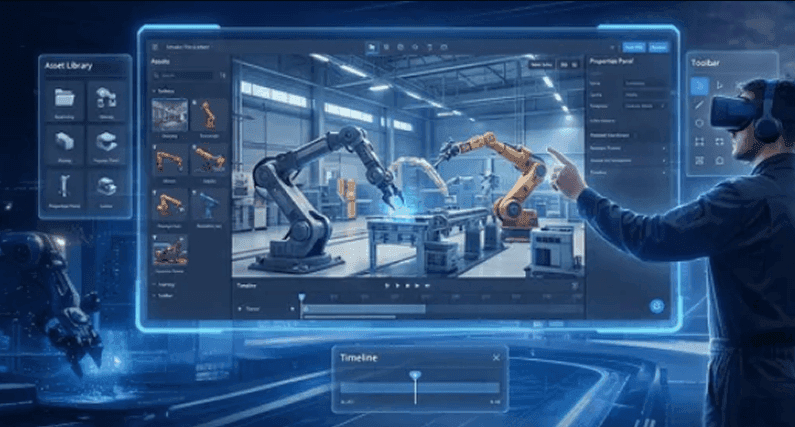
Training Intelligent Systems in Virtual Environments
Before deployment in the real world, AI systems can learn, simulate, and optimize in controlled virtual environments — reducing risk while accelerating capability.
How it works

Simulate the Environment
Real-world systems, equipment, and workflows are recreated as high-fidelity digital environments.

Train AI in Context
AI agents learn through interaction — understanding constraints, tasks, and decision paths within realistic scenarios.

Transfer to Reality
Validated behaviors are deployed to physical systems, ensuring safer and more reliable execution.
From Training to Real-World Impact
Human–AI collaboration transforms how systems operate—improving speed, reducing risk, and enabling scalable intelligence across environments.
Before

Slower Decision Cycles
Manual processes delay responsiveness across disjointed systems.

Higher Operational Risk
Inconsistent execution leads to errors and higher safety risks.

Prolonged Training Times
Slow cycle of learning and iteration results in long onboarding periods.

Scattered and Fragmented Data
Processes and insights are siloed and inconsistent.
After

Faster Decision Cycles
Human–AI systems enable faster interpretation of data and execution of actions across complex workflows.

Reduced Operational Risk
Simulated training and AI-assisted decision-making significantly reduce errors in real-world scenarios.

Higher System Efficiency
Tasks are optimized through continuous feedback between human expertise and AI learning systems.

Scalable Across Environments
Standardized intelligent workflows can be deployed consistently across sites and operations.