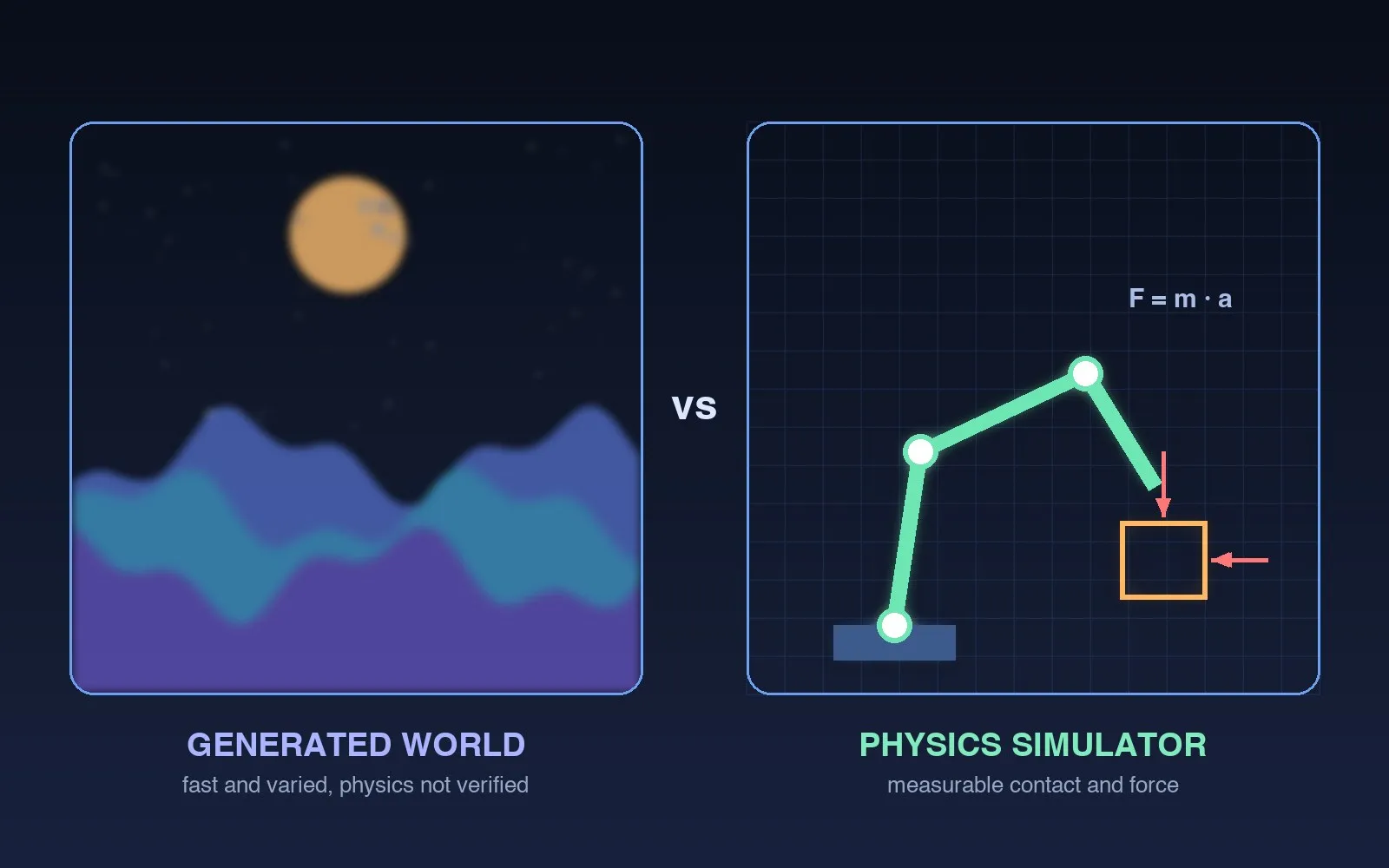
In short: Genie 4, released by Google DeepMind on 27 October 2026 as a research preview, generates interactive worlds in real time from text, with sound, and lets you change the scene while it runs. DeepMind paired it with Gemini 4 Argon to simulate an Apptronik Apollo humanoid playing checkers. That makes world models a new kind of virtual space for robots, but not a replacement for physics simulators. A generated world is fast and varied but does not promise accurate forces or contact. A physics simulator such as Isaac Lab or MuJoCo is slower to build but measurable and repeatable. Most labs will use both, plus real demonstrations.
What Genie 4 is
Genie 4 is a world model: instead of rendering a scene built by hand, it generates the next moments of a world as you move through it. According to DeepMind's announcement, written by Raia Hadsell, Diego Rivas and Hang Qi:
- Real-time steering. You move with standard keyboard controls and change the scene with text, for example the weather, the camera position, or new people and objects.
- Sound with the picture. It generates ambient sound, music and dialogue together with the visuals. DeepMind says none of its earlier real-time world models generated audio natively.
- A guiding agent. Gemini 3.8 Flash watches the scene, splits a goal into steps, checks frames to confirm each step, and changes plan if the world or the user changes.
- Built on Gemini. It draws on Gemini Omni for how the world looks and behaves, and on other Gemini models for reasoning and continuity.
Access is limited. It is a research preview for trusted testers, with Project Genie access for Google AI Ultra subscribers and early access through the Gemini API and Google AI Studio described as coming soon. All generated video and audio carry SynthID watermarks.
The robotics example
DeepMind's robotics demonstration combines two models. Gemini 4 Argon breaks a user's task into steps and passes them to Genie 4 as text captions while it renders, so the simulation can adapt as it runs. The example shown is Apptronik's Apollo humanoid playing checkers.
DeepMind does not report a success rate or any other measurement for this experiment. It is a demonstration of what the pairing can do, not evidence that a policy trained in a generated world works on a real robot.
What DeepMind says does not work yet
DeepMind lists its own open problems:
- Visual details and object permanence drift over long sessions or after many edits.
- Complex physical interactions are still hard.
- Real-time audio accuracy, legible text and spatial accuracy need more work.
- Long-term consistency is an active research area.
For robot training, the second point matters most. Grasping, pushing, inserting and handing over depend on accurate contact, which is exactly what a generated world does not yet promise.
Two kinds of virtual worlds for robots
Google's own robotics work shows the contrast. In October, the Gemini 4 Argon for Robotics post described Argon building a calibrated MuJoCo simulation twin from a real teleoperation episode, tuning it until simulated fingertip contact forces matched the logged tactile data. Google reports that 4,500 or more simulated episodes from such a twin raised one real-world task's success rate from 56% to 75%. We covered this in teleoperation versus human video.
Put side by side:
- Generated world (Genie 4). Built from a text prompt. Wide visual variety. Can be steered live. Physics not verified, results not yet measured, access limited.
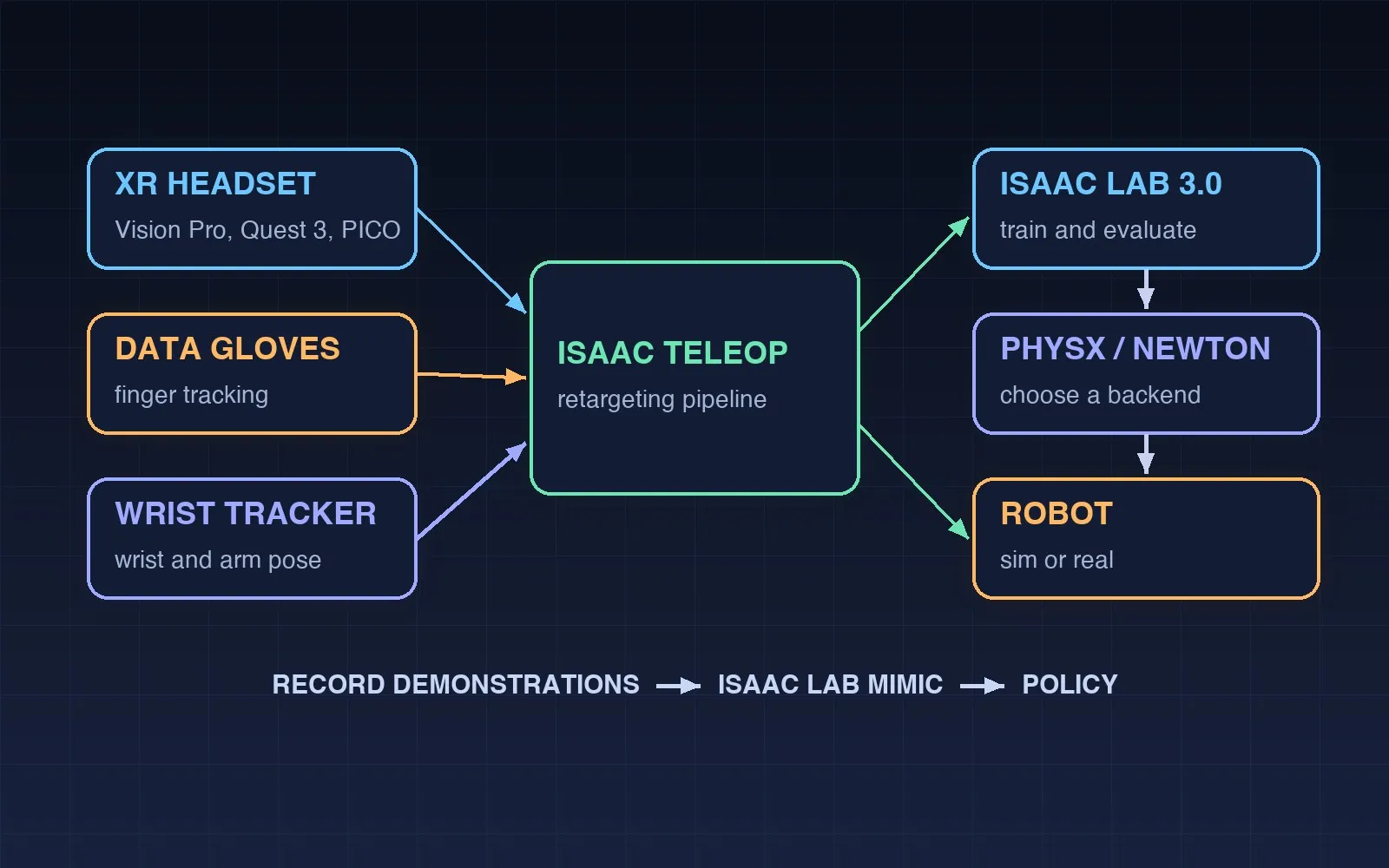
- Physics simulator (Isaac Lab, MuJoCo). Built from robot models and assets. Contact, force and timing can be checked against real data. Runs can be repeated and run in parallel. Slower to set up and less visually varied. See what Isaac Lab 3.0 changes.
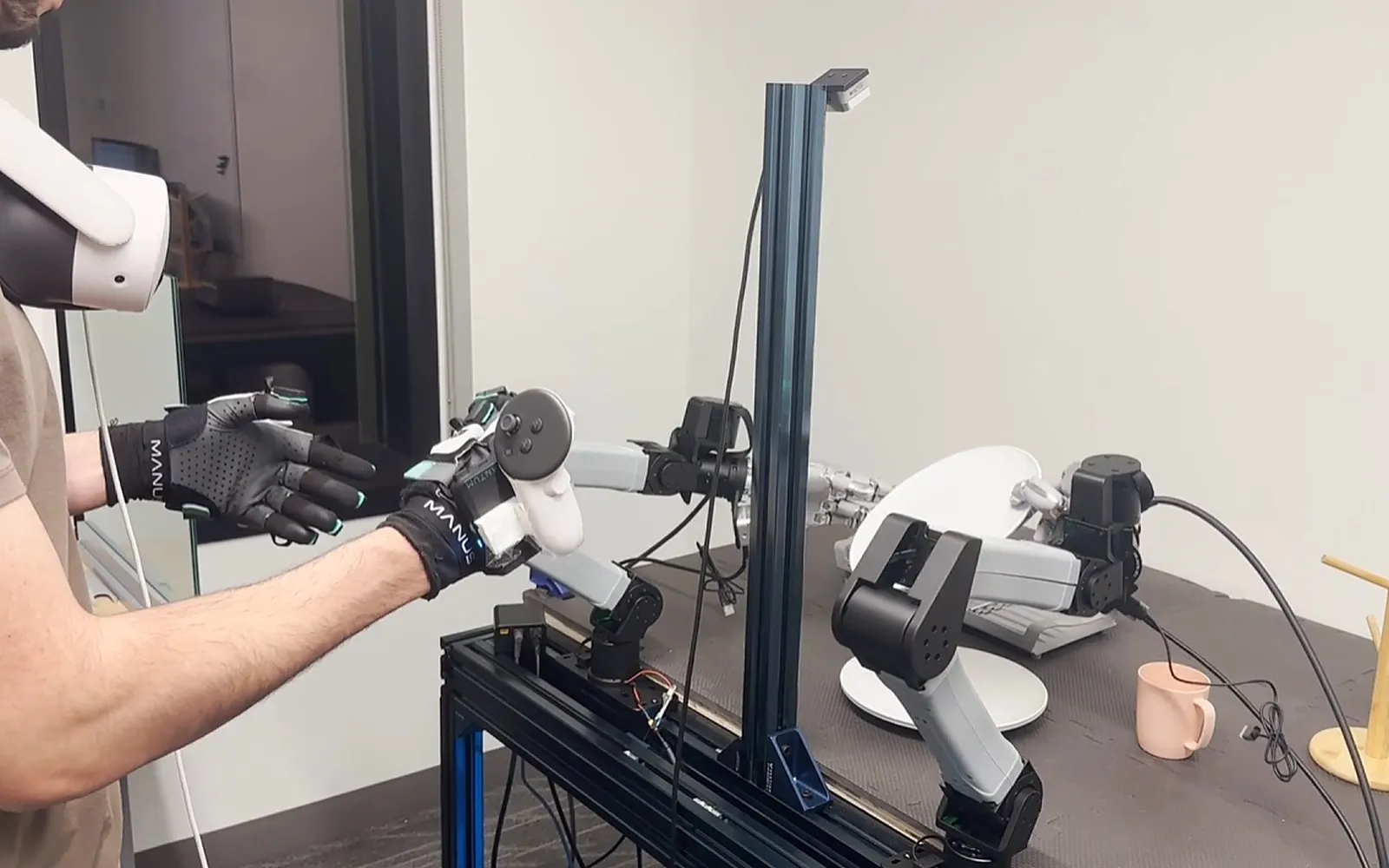
- Real demonstrations (VR and glove teleoperation). Slowest and most expensive, but the ground truth that both kinds of simulation are judged against.
Where a generated world could help a lab
These are our suggestions, not claims from DeepMind.
- Scenario drafting. Sketch a task scene, a home, a workshop or a cleanroom, before modelling it properly in a physics simulator.
- Visual variety. Explore lighting, clutter and layouts to decide which variations matter for testing a vision model.
- Planning and language checks. Test whether a model breaks a task into sensible steps before running it on hardware, as in DeepMind's checkers example.
- Training content. DeepMind lists rapid prototyping of interactive experiences and enterprise scenario generation among its uses. For XR training teams, that suggests faster storyboards for VR scenarios, which still need to be built and checked in a proper engine.
- Teaching. Show students the difference between a world that looks right and one that is physically right.
What it should not do yet is replace contact-rich training, safety validation or any result you need to measure and repeat.
Where Aedu AI fits
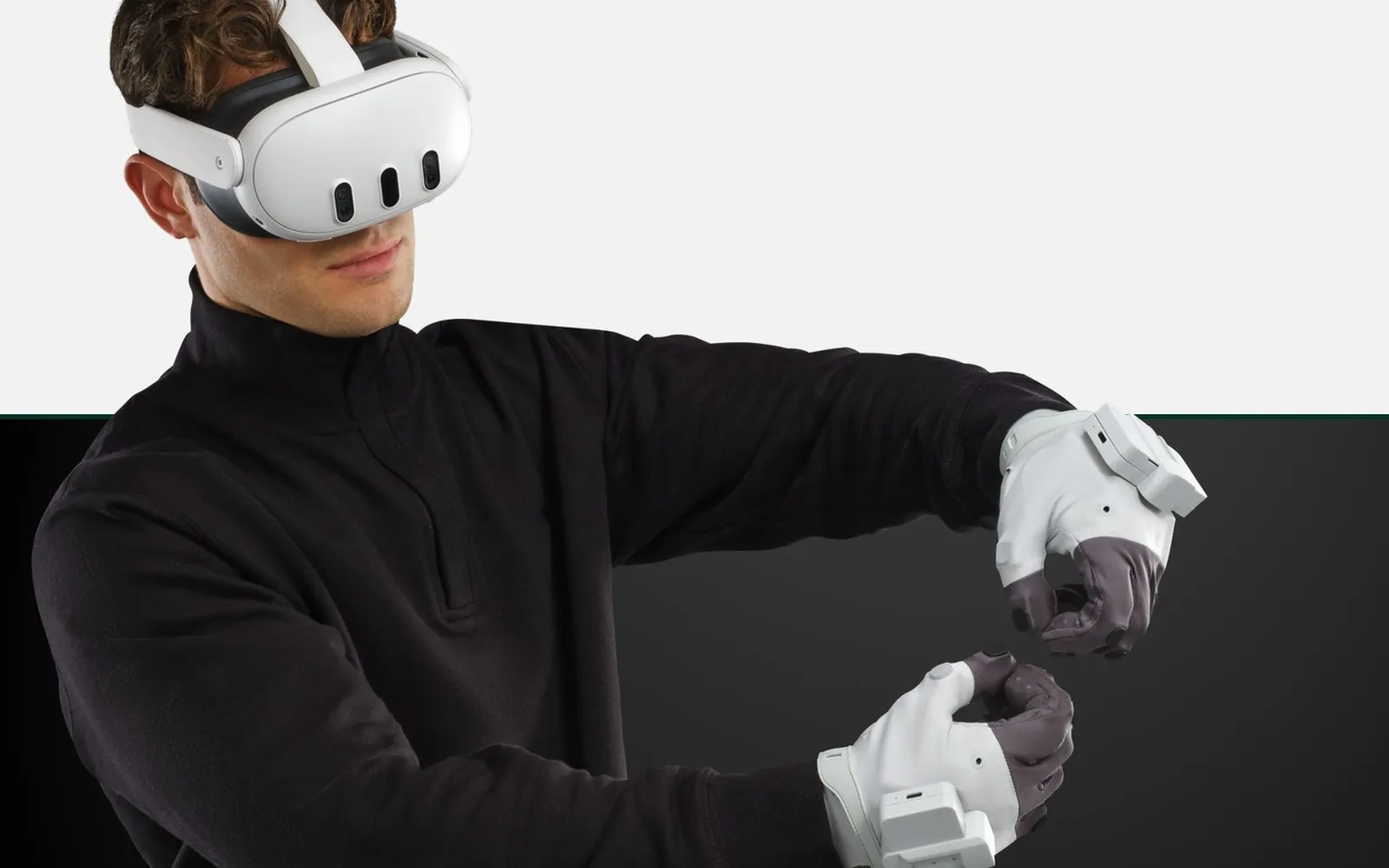
Aedu AI designs, supplies and installs Physical AI Labs and XR Labs in Singapore, Malaysia and across Southeast Asia. Our labs combine VR and MANUS glove teleoperation for real demonstrations, NVIDIA Isaac Lab for physics simulation, and immersive spaces for reviewing scenes together. As world models become available, they can sit in front of this pipeline as a drafting tool. To plan a lab, get in touch.
Key points
- Google DeepMind released Genie 4 on 27 October 2026 as a research preview for trusted testers.
- It generates interactive worlds with sound in real time and can be changed with text while it runs.
- DeepMind paired it with Gemini 4 Argon to simulate an Apptronik Apollo humanoid playing checkers, with no reported results.
- DeepMind says complex physical interactions and long-term consistency remain open problems.
- Physics simulators remain the tool for contact-rich, measurable training; real teleoperation data remains the reference.
FAQ
What is Genie 4?
A world model from Google DeepMind that generates interactive, real-time worlds with visuals and sound, and lets users change the scene with text prompts.
Can I use Genie 4 today?
Only as a trusted tester. DeepMind says access is coming to Google AI Ultra subscribers in Project Genie and to early access partners through the Gemini API and Google AI Studio, with a waitlist open.
Can a robot be trained in Genie 4?
DeepMind showed a simulated Apollo humanoid playing checkers but reported no results. It also says complex physical interactions remain a research challenge, so contact-rich training still belongs in physics simulators.
What is the difference between a world model and a physics simulator?
A world model generates what a scene should look like next. A physics simulator calculates forces and contact from models of the robot and objects, so results can be measured and repeated.
Does Genie 4 replace Isaac Lab?
No. They do different jobs. Isaac Lab trains and evaluates robot policies with physics; Genie 4 generates varied interactive scenes.
Is Genie 4 useful for XR training?
DeepMind lists rapid prototyping of interactive experiences among its uses, but does not mention XR headsets. For XR teams it is most likely a drafting tool, with final scenarios built in a proper engine.
Sources
- Google DeepMind, "Genie 4: A new generation of world simulation" (27 October 2026): https://deepmind.google/blog/genie-4-a-new-generation-of-world-simulation/
- Google for Developers Blog, "Gemini 4 Argon for Robotics" (13 October 2026): https://developers.googleblog.com/gemini-4-argon-for-robotics/
- Isaac Lab v3.0.0 release notes, GitHub (20 October 2026): https://github.com/isaac-sim/IsaacLab/releases/tag/v3.0.0
The cover image is an Aedu AI illustration. Genie 4 is a Google DeepMind product, and no DeepMind images are used.
- Physical AI
- World Model
- Simulation
- Robot Training
- Google DeepMind