In short: Isaac Lab 3.0, NVIDIA's open-source framework for training robot policies, became generally available in October 2026. The big changes are a choice of physics, rendering and visualisation backends, most workflows running without the full Isaac Sim application, and a new teleoperation layer that brings XR headsets and MANUS data gloves into one retargeting pipeline. It also breaks code written for 2.x, so labs should plan the upgrade rather than install it mid-project. NVIDIA announced it at GTC Berlin on 21 October together with a library of more than 2,000 simulation-ready assets and a human activity dataset with 3D hand tracking.
What NVIDIA announced
At GTC Berlin on 21 October 2026, NVIDIA expanded its Isaac robotics platform. The pieces most relevant to a university or industry robot training lab are:
- Isaac Lab 3.0, now generally available. The GitHub release is dated 20 October and is described as the recommended starting point for new projects and for moving off 2.x.
- Isaac OS, an open-source runtime built on NVIDIA Holoscan. It links AI models, sensors, controls and robot hardware, and is meant to behave the same in simulation and on the real robot.
- SimReady Central Library, more than 2,000 simulation-ready robot and factory assets hosted on Hugging Face. Contributors named by NVIDIA include Franka Robotics, Universal Robots, Robotiq, FANUC and Comau.
- Human 1M dataset, human activities recorded as synchronised video from three viewpoints with 3D hand tracking. NVIDIA says it is on Hugging Face, with the full dataset available to Cosmos Coalition partners. The announcement does not give its size or licence.
- Agile ONE SN, a reference humanoid from Agile Robots built on Isaac GR00T and Jetson Thor, with two WUJI Hand 2 hands of 20 degrees of freedom each. NVIDIA lists it for early 2027.
What is new in Isaac Lab 3.0
One task, several backends. Physics, rendering and visualisation are now chosen independently. Alongside PhysX, the Newton physics engine is available as a Warp-based backend with MuJoCo-Warp, VBD and MPM solvers, which adds deformable objects and particles to rigid bodies.
Less dependence on Isaac Sim. According to the release notes, most workflows now run without Isaac Sim. It is still needed for PhysX and RTX rendering, the ROS bridge, XR and livestreaming. For a teaching lab this means students can train policies with a lighter install, while the XR teleoperation station still runs the full stack.
One command line for training. `isaaclab train` and `isaaclab play` work across RSL-RL, RL-Games, skrl, Stable-Baselines3, RLinf and TorchRL.
Deployment tools. Policies can be exported for deployment, and the release includes guidance on moving a policy between PhysX and Newton.
The new teleoperation layer
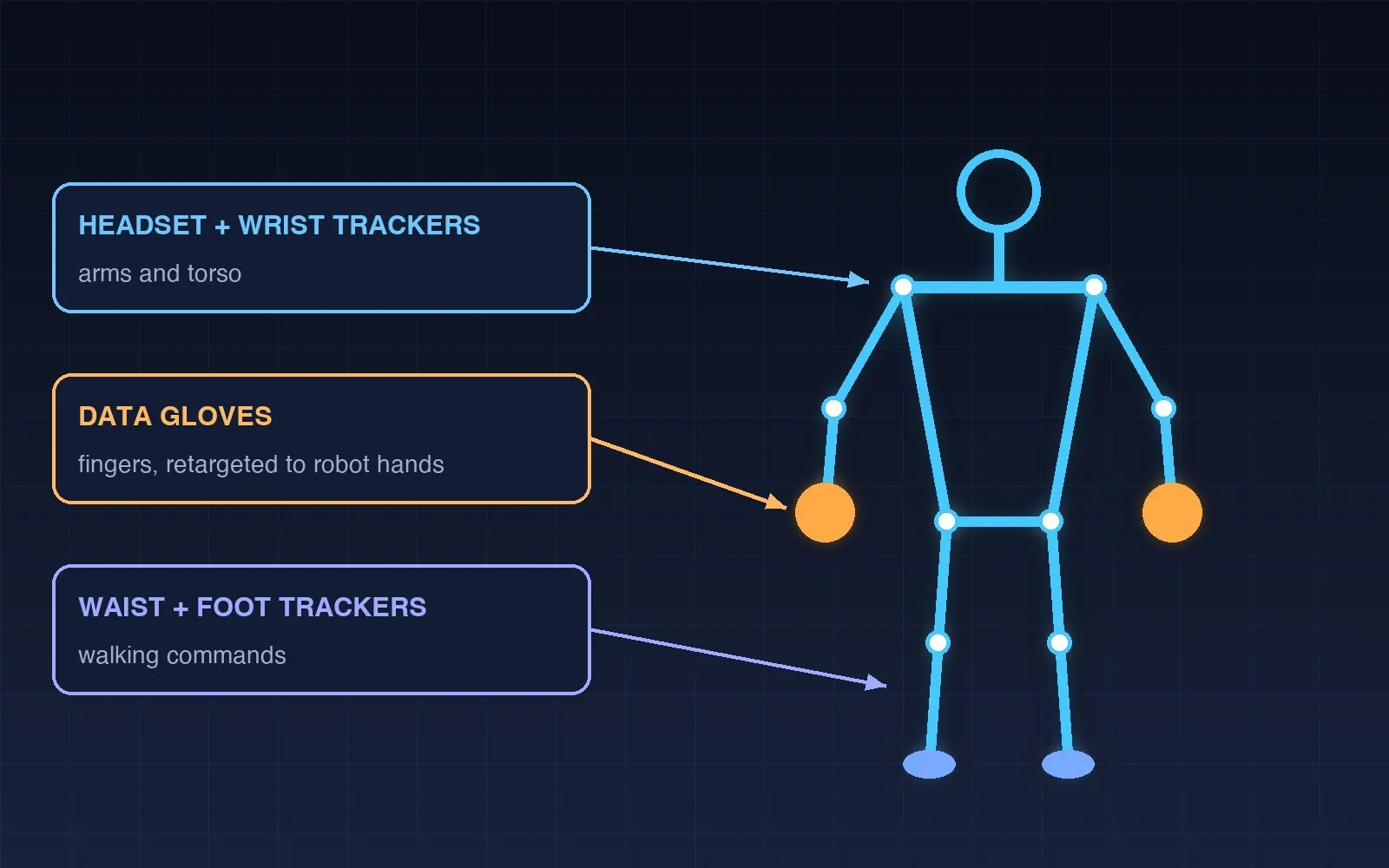
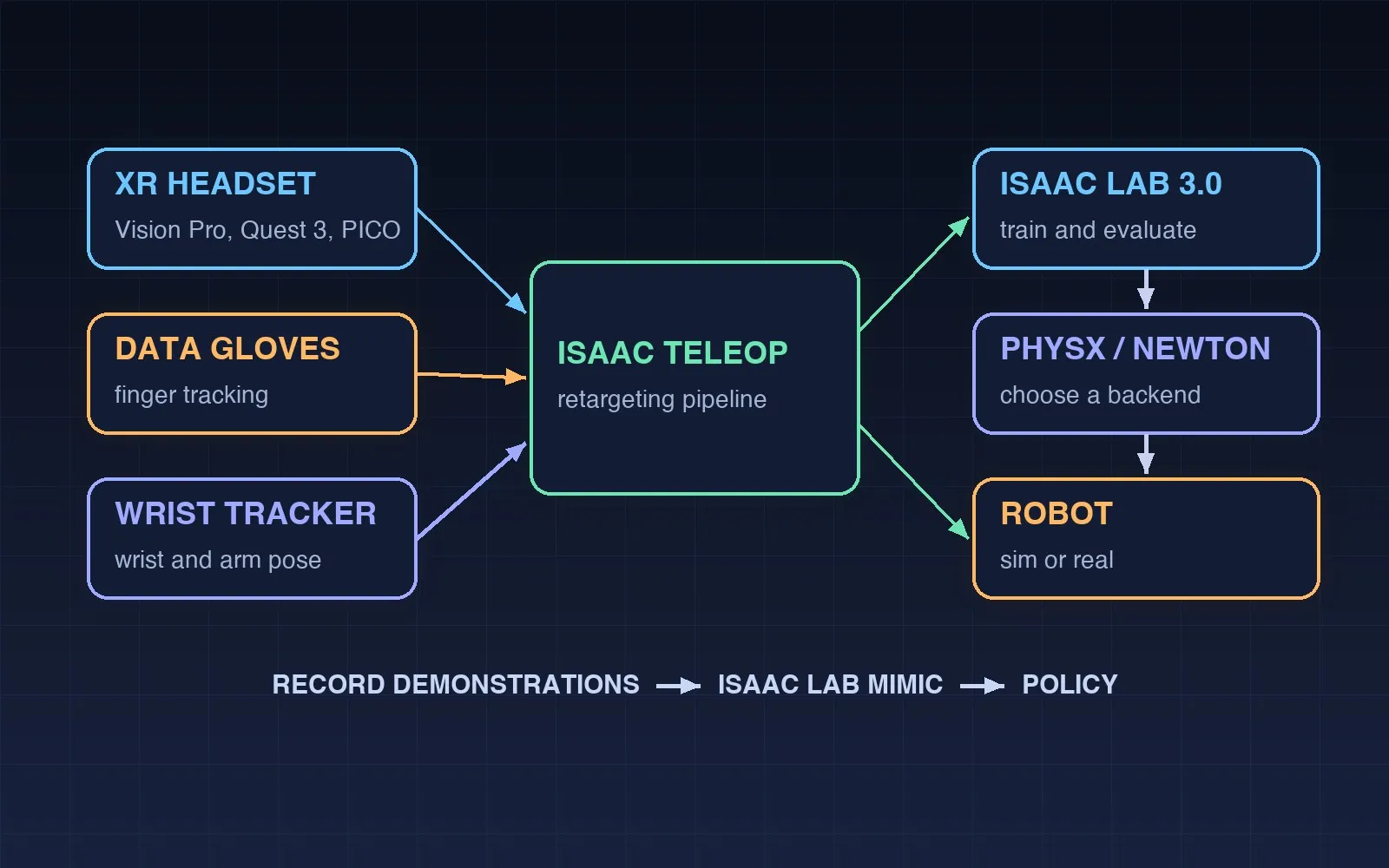
Isaac Teleop, now also called Isaac Capture, replaces the older built-in XR teleoperation code in Isaac Lab, which is deprecated in 3.0. It is the layer that turns human input into robot actions and recorded demonstrations. The Isaac Lab documentation lists these inputs:
- Apple Vision Pro, with 26-joint hand tracking, through a native visionOS client.
- Meta Quest 3 and PICO 4 Ultra, with controllers and hand tracking, through a browser-based CloudXR client.
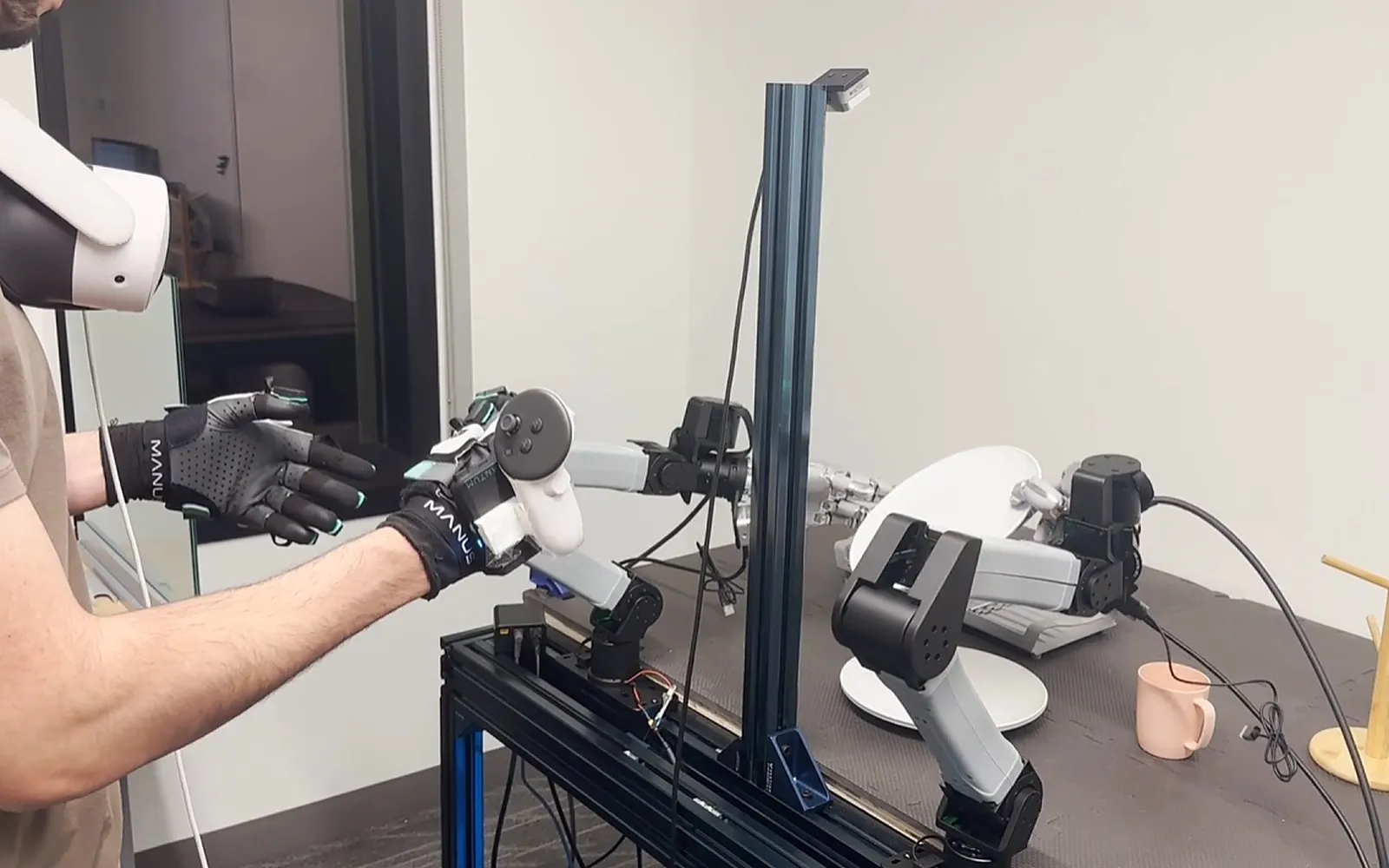
- MANUS gloves, for finger tracking through a bundled plugin. The wrist position has to come from a separate tracker.
- Haptikos exoskeletons, for finger tracking through their own plugin.
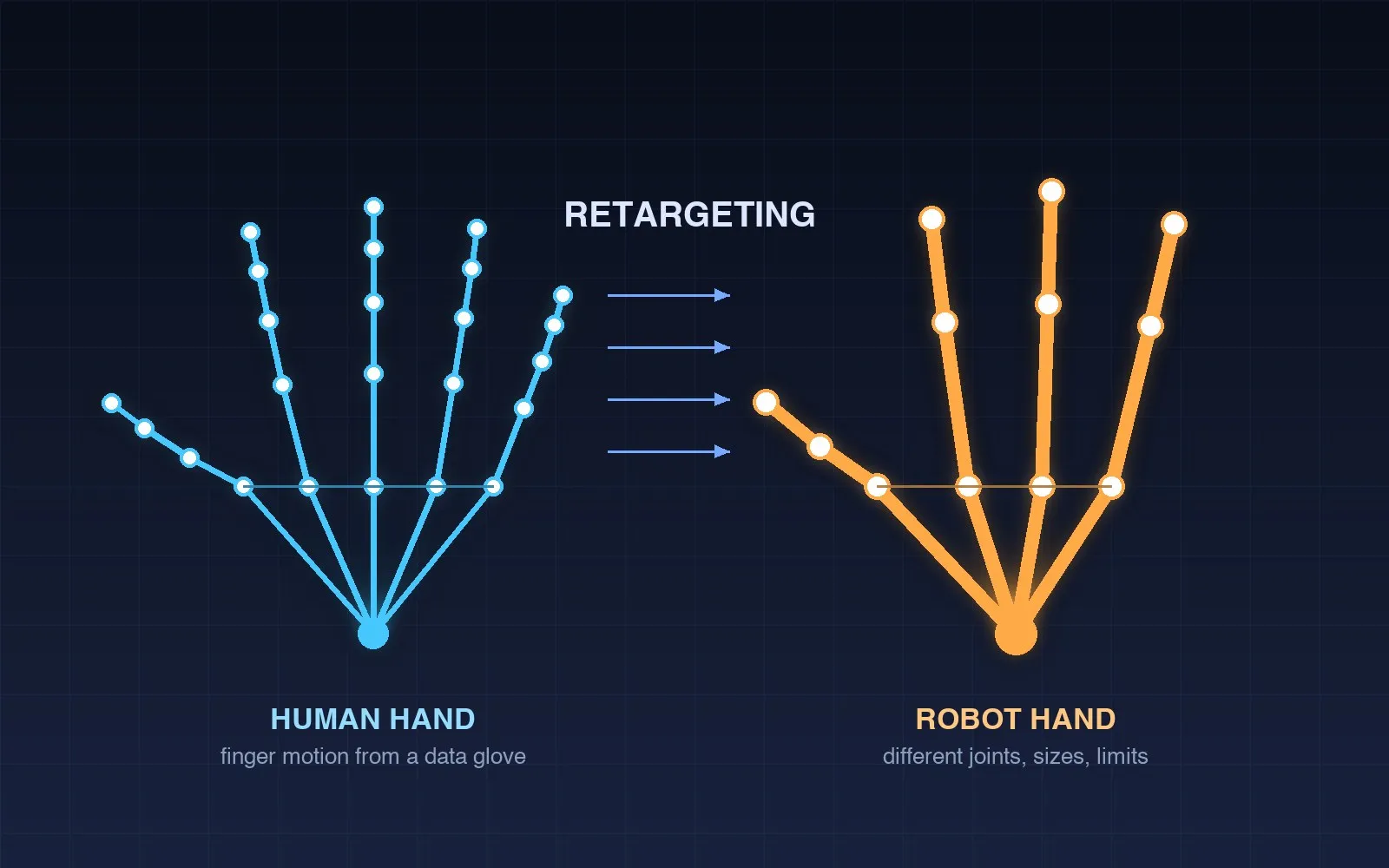
Retargeters are arranged in a pipeline. Some map a hand or controller pose to the robot's end effector, some turn a trigger or pinch into a gripper command, and dexterous-hand retargeters map full hand tracking onto robot finger joints. Recorded demonstrations can then go into Isaac Lab Mimic or another imitation learning framework.
This is the same pattern we described in how MANUS gloves fit into a humanoid stack: the glove handles the fingers, something else tracks the wrist, and a retargeter connects them to the robot. If you want the research behind that last step, see what recent papers say about retargeting.
What breaks when you upgrade
Isaac Lab 3.0 is not a drop-in update. Changes listed in the release notes include:
- Quaternion order changes from (w, x, y, z) to (x, y, z, w). This is easy to miss and silently rotates objects.
- App launching and task configuration use new functions, and assets and sensors in direct tasks move under the scene configuration.
- Sensor and actuator data come back in a new array type, and several names change.
- The old OpenXR teleoperation module is deprecated in favour of Isaac Teleop.
- Requirements move to Isaac Sim 6.2, Python 3.12 in a fresh environment, and PyTorch 2.11 with CUDA 13.0.
NVIDIA publishes a 2.x to 3.0 migration guide. Recorded datasets and trained policies from 2.x should be checked after the move, not assumed to transfer.
Human video data and glove data
The Human 1M dataset and glove teleoperation answer different questions. Large human video datasets with hand tracking help a model learn what people do with their hands across many scenes. Glove teleoperation records exactly what a specific robot hand did on a specific task. Recent humanoid models combine both: pre-training on human video, then fine-tuning on robot demonstrations. We compared the two sources in teleoperation versus human video.
What a lab should do now
These are practical suggestions, not NVIDIA recommendations.
- Do not upgrade mid-semester or mid-project. Pin the 2.x version for running work and start new projects on 3.0.
- Set up a fresh environment for Python 3.12 and the new CUDA and PyTorch versions.
- Check the quaternion change first in any custom code and recorded data.
- Move XR teleoperation to Isaac Teleop and test each device: headset, MANUS gloves and wrist tracker.
- Re-record a small test set of demonstrations and confirm Isaac Lab Mimic accepts it before collecting at scale.
- Try Newton for tasks with cloth, cables or soft objects, where deformable physics matters.
Where Aedu AI fits
Aedu AI designs, supplies and installs Physical AI Labs and XR Labs in Singapore, Malaysia and across Southeast Asia. We supply MANUS Metagloves, set up NVIDIA Isaac Lab and Isaac Teleop with XR headsets, connect robots through ROS 2, and train teams to record clean demonstrations. If you are planning a new lab on Isaac Lab 3.0 or moving an existing one, get in touch.
Key points
- Isaac Lab 3.0 became generally available in October 2026 and was announced at GTC Berlin on 21 October.
- Physics, rendering and visualisation backends are now chosen separately, and Newton adds deformable simulation.
- Most training workflows no longer need the full Isaac Sim, but XR teleoperation still does.
- Isaac Teleop (Isaac Capture) replaces the old XR code and supports Apple Vision Pro, Meta Quest 3, PICO 4 Ultra, MANUS gloves and Haptikos exoskeletons.
- The upgrade breaks 2.x code, including quaternion order, so plan the migration.
- NVIDIA also released over 2,000 SimReady assets and the Human 1M dataset with 3D hand tracking.
FAQ
When was Isaac Lab 3.0 released?
The GitHub release is dated 20 October 2026, and NVIDIA announced general availability at GTC Berlin on 21 October 2026.
Do I still need Isaac Sim?
For many training workflows, no. Isaac Sim is still needed for PhysX and RTX rendering, the ROS bridge, XR teleoperation and livestreaming.
Does Isaac Lab 3.0 support MANUS gloves?
Yes. MANUS gloves connect through a plugin in Isaac Teleop for finger tracking. Wrist position comes from a separate tracker.
Which XR headsets work with Isaac Lab 3.0 teleoperation?
The documentation lists Apple Vision Pro, Meta Quest 3 and PICO 4 Ultra, streamed through NVIDIA CloudXR.
Should I upgrade an existing 2.x project?
Only when you have time to migrate and test. The release changes quaternion order, configuration functions and data types, so code and recorded data need checking.
What is the Human 1M dataset?
A dataset of human activities with synchronised three-view video and 3D hand tracking, announced by NVIDIA. NVIDIA says the full version is for Cosmos Coalition partners, and it has not stated the size or licence.
Can Aedu AI help set up Isaac Lab 3.0?
Yes. We design Physical AI Labs with Isaac Lab, Isaac Teleop, XR headsets and MANUS gloves. See our Physical AI Lab page.
Sources
- NVIDIA Newsroom, "NVIDIA Advances Isaac Platform for General-Purpose Robotics" (21 October 2026): https://nvidianews.nvidia.com/news/nvidia-advances-isaac-platform-for-general-purpose-robotics-with-new-reference-humanoid-frameworks-simulation-pipelines-and-data
- Isaac Lab v3.0.0 release notes, GitHub (20 October 2026): https://github.com/isaac-sim/IsaacLab/releases/tag/v3.0.0
- Isaac Lab documentation, Isaac Teleop: https://isaac-sim.github.io/IsaacLab/main/source/features/isaac_teleop.html
- MANUS, "NVIDIA launches Isaac Teleop at GTC 2026 with MANUS as the official data glove" (22 May 2026): https://www.manus-meta.com/blog/nvidia-launches-isaac-teleop-at-gtc-2026-with-manus-as-the-official-data-glove
The cover image is an Aedu AI illustration.
- NVIDIA Isaac
- Isaac Lab
- Physical AI
- Teleoperation
- MANUS