In short: YYForce, a Nasdaq-listed workforce and facility management company, opened a Robotics Training, Data and Experience Center in Singapore on 6 October 2026 to train humanoid robots, collect operating data and test how people and robots share work. On 30 October it announced a fleet of 11 autonomous service robots at Novotel and Mercure Singapore on Stevens under a 24-month robotics-as-a-service agreement. The sequence shows a pattern Singapore operators are adopting: train and test robots in a controlled space first, then deploy. Building that kind of space is now a practical question for service companies, campuses and training providers.
What YYForce announced
The training centre (6 October). According to the company's release, the centre is used to:
- Train humanoid robots in mock-up settings for housekeeping, restrooms, banquets and other hotel services.
- Collect operating data on navigation, movement, object handling, task completion and the surrounding conditions.
- Test workflows in which human staff, humanoid robots and specialised service robots work together.
- Show customers cleaning, delivery, security, pool-cleaning and humanoid service robots, plus a security command centre that combines robot patrols, cameras and sensors.
The hotel fleet (30 October). YYForce announced 11 autonomous service robots for the dual-branded Novotel and Mercure Singapore on Stevens. The robots handle deliveries within the hotel and to guest rooms, support housekeeping across floors, call lifts through an elevator integration, and connect to the hotel phone system to notify guests in their rooms. The hotel pays through a 24-month robotics-as-a-service model rather than buying the robots outright.
What the announcements do not say
Reading the two releases closely, several things are left open:
- No brands or models are named for the robots, and the size of the centre is not given.
- No results are reported for the hotel fleet. The release does not confirm all 11 robots are already in full operation.
- Humanoids are still in training. The company states that its training work does not show humanoids can carry out full housekeeping or restroom cleaning on their own.
- No material robotics revenue had been announced as of the centre opening, and the company says commercial viability is uncertain.
- Teleoperation is not mentioned, so it is not clear how the humanoids are being taught.
That caution is useful. It separates what specialised service robots already do in Singapore buildings, such as delivery, cleaning and patrol, from what humanoids are still learning.
Why a training centre comes before deployment
Service robots fail in ordinary places: a lift that does not answer, a corridor with a trolley in it, a guest standing in the way. A training and data centre lets an operator rehearse those situations before a customer sees them. It also produces the data that later improves the robots. For humanoids the case is stronger still, because tasks such as making a bed or wiping a basin depend on hand skills that need many recorded demonstrations.
We described a much larger version of this idea in NEURA and TUM's RoboGym, and how a university lab combines VR data creation with a real practice room.
The wider Singapore picture
YYForce's move sits within a busy month for Physical AI in Singapore:
- The Punggol testbed. IMDA, JTC and the Singapore Institute of Technology are building a physical AI testbed at Punggol Digital District. YYForce's release notes that it is not taking part.
- The National Embodied AI Challenge. Launched on 22 October by the National Robotics Programme, A*STAR, PINE Lab@NTU and Micron, it asks teams to solve manufacturing tasks with embodied AI. See our article on the challenge.
- Skills. The National Robotics Programme announced in April a plan to teach physical AI to at least 10,000 students over five years, from primary school to university.
Together these point to demand for places where robots can be trained, tested and taught, and for people who know how to do it.
What a robot training and data facility needs
These are our suggestions for service companies, campuses and training providers, not details from YYForce.
- Mock-up rooms that match the real site. A hotel room, a restroom, a corridor with a lift, built with the same fixtures the robots will meet.
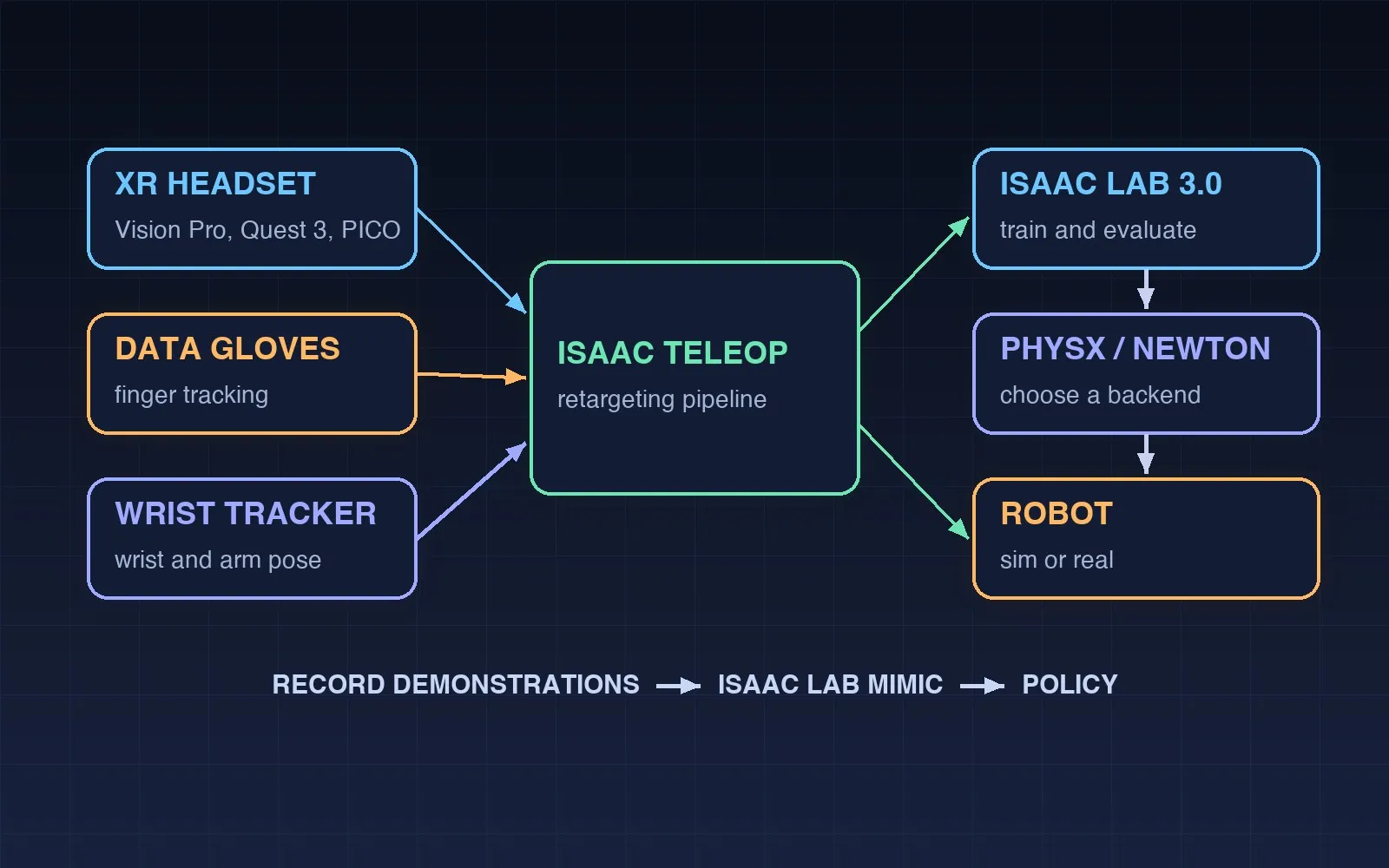
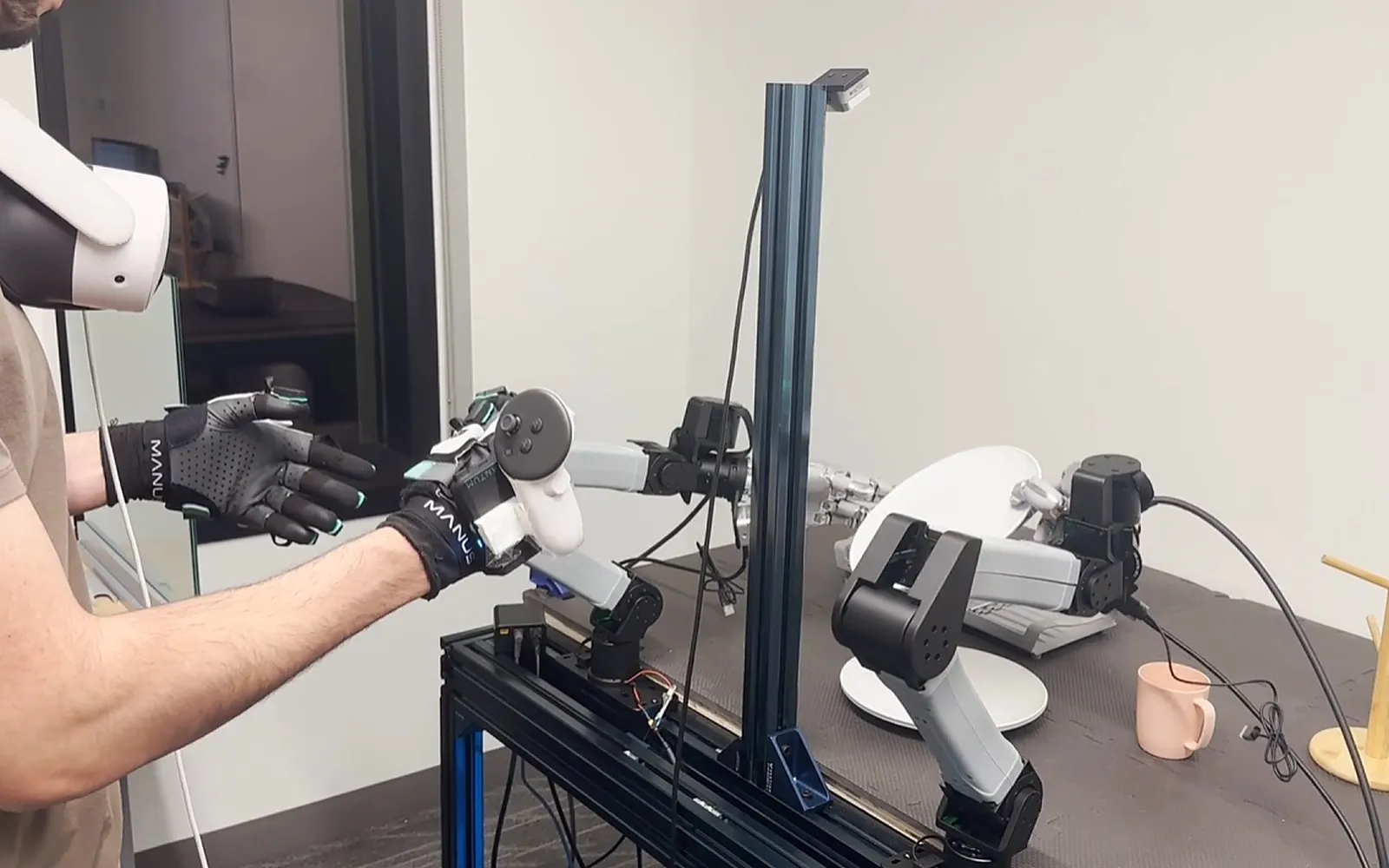
- Teleoperation stations. A VR headset, data gloves such as MANUS Metagloves and wrist tracking, so operators can show a humanoid how to do hand tasks and record each attempt.
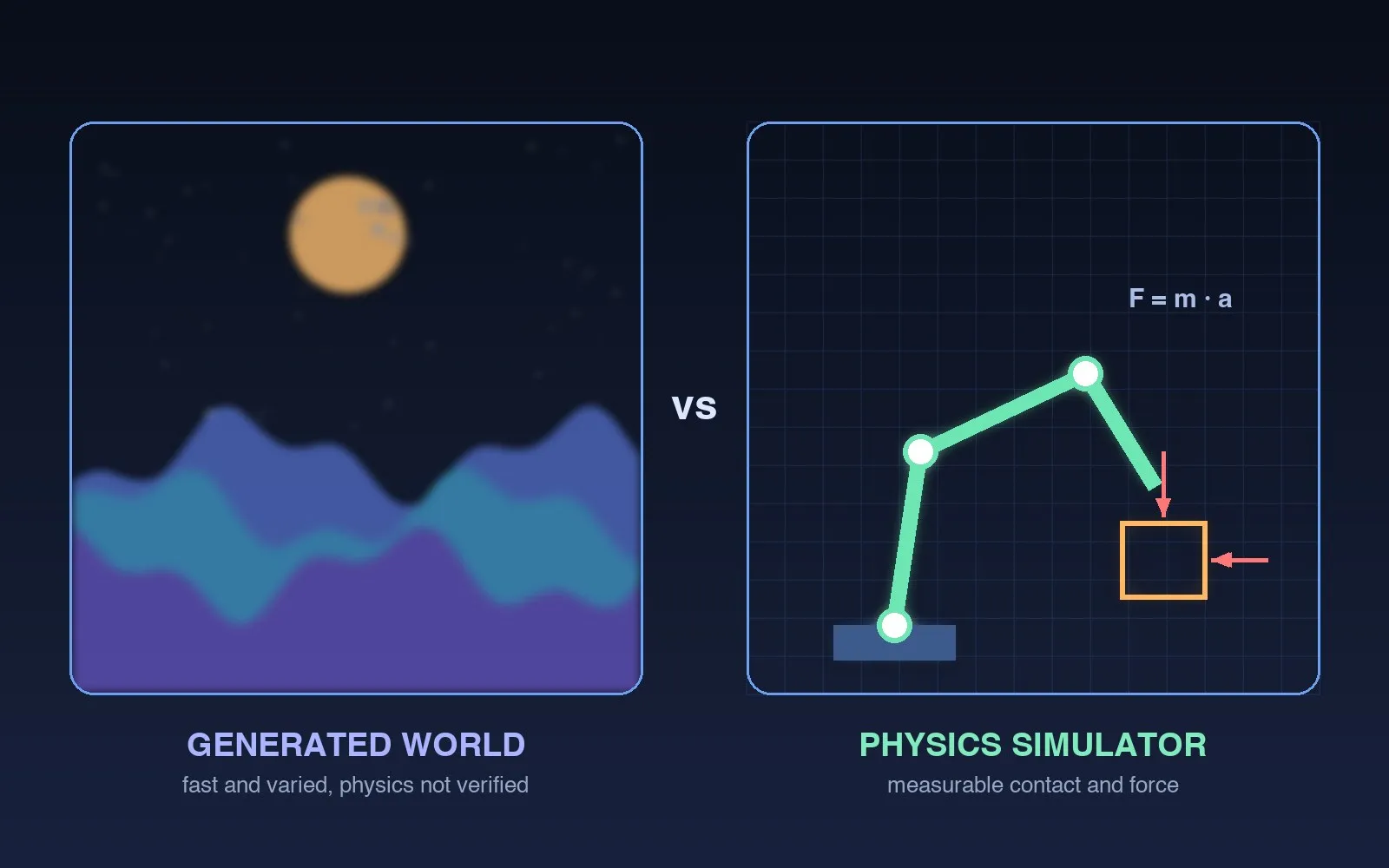
- Simulation. A physics simulator such as NVIDIA Isaac Lab to rehearse tasks and multiply recorded demonstrations before using real robot time. See what Isaac Lab 3.0 changes.
- Data logging on one clock. Cameras, robot states, glove data and task labels recorded together, so episodes can be replayed and used for training.
- Staff training. Workers who will share the floor with robots need to learn the new workflows. VR training lets them practise before the robots arrive, as in our guide to immersive training centres in Singapore.
- A space to show customers. An area where clients and management can see robots, data and simulations together.
How Aedu AI can help
Aedu AI is based in Singapore and designs, supplies and installs Physical AI Labs and XR Labs across Singapore, Malaysia and Southeast Asia. For organisations planning a robot training or data facility, we offer:
- Physical AI Lab configurations, from a Sim Teleop Lab that needs no robot, through a Dexterous Teleop Lab with one arm and a dexterous hand, to a Bimanual Data Lab with two arms or a humanoid upper body.
- Teleoperation and data collection with VR headsets, MANUS gloves, NVIDIA Isaac Lab and Isaac Teleop, connected to your robots through ROS 2.
- XR training spaces, including VR stations, CAVE projection rooms and holographic displays, for staff training and for showing robot scenarios to customers.
- Set-up and training so your team can record clean data from the first week. The data stays with you and the system runs on your premises.
If you are planning a robot training centre, a demonstration space or a teaching lab, talk to us.
Key points
- YYForce opened a robotics training, data and experience centre in Singapore on 6 October 2026.
- On 30 October it announced 11 service robots at Novotel and Mercure Singapore on Stevens under a 24-month robotics-as-a-service agreement.
- The company says its humanoids have not yet shown they can do full housekeeping or restroom cleaning on their own.
- Singapore is also building a Punggol physical AI testbed and running a National Embodied AI Challenge.
- A training facility needs mock-up rooms, teleoperation, simulation, synchronised data logging and staff training.
FAQ
What did YYForce open in Singapore?
A Robotics Training, Data and Experience Center, announced on 6 October 2026, for training humanoid robots, collecting operating data, testing human-robot workflows and showing robots to customers.
What robots did YYForce deploy at the hotel?
A fleet of 11 autonomous service robots at Novotel and Mercure Singapore on Stevens, for deliveries, housekeeping support and guest notifications. The release does not name the robot brand or model.
What is robotics as a service?
A model in which a customer pays a recurring fee for robots and their support instead of buying them. YYForce's hotel agreement runs for 24 months on this basis.
Can humanoid robots clean hotel rooms yet?
Not reliably. YYForce itself says its training does not show humanoids can do full housekeeping or restroom cleaning autonomously.
How do you train a humanoid robot for hand tasks?
Usually by recording human demonstrations, often through VR and data-glove teleoperation, then training a policy on them, with simulation used to rehearse and expand the data.
Can Aedu AI build a robot training centre in Singapore?
Yes. We design and install Physical AI Labs and XR Labs with teleoperation, simulation, data collection and staff training. See our Physical AI Lab page.
Sources
- YYForce, "YYForce Opens Singapore Robotics Center to Advance Humanoid Training and Service Robot Deployment" (PR Newswire, 6 October 2026): https://www.prnewswire.com/news-releases/yyforce-opens-singapore-robotics-center-to-advance-humanoid-training-and-service-robot-deployment-302899922.html
- YYForce, "YYForce Deploys 11 Commercial Hospitality Robots at Novotel & Mercure Singapore on Stevens" (GlobeNewswire via FinancialContent, 30 October 2026): https://www.financialcontent.com/article/gnwcq-2026-10-29-yyforce-deploys-11-commercial-hospitality-robots-at-novotel-and-mercure-singapore-on-stevens
- TNGlobal, "Singapore launches first national embodied AI challenge" (22 October 2026): https://technode.global/2026/10/22/singapore-launches-first-national-embodied-ai-challenge-to-accelerate-real-world-robotics-deployment-in-manufacturing/
- VnExpress International, "Singapore to train 10,000 students to build and use AI-powered robots" (April 2026): https://e.vnexpress.net/news/news/education/singapore-to-train-10-000-students-to-build-and-use-ai-powered-robots-5060554.html
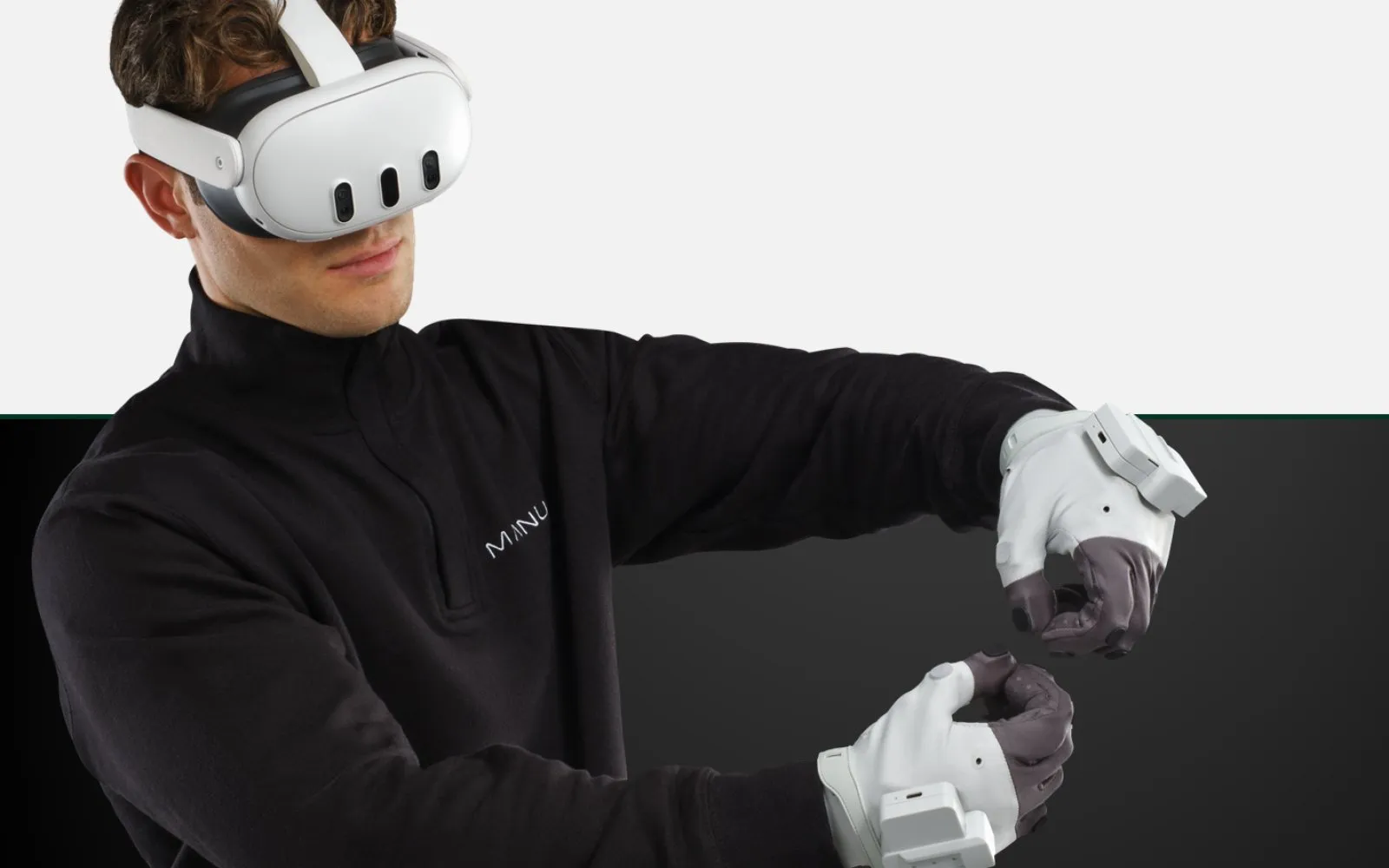
All facts about YYForce come from the company's own press releases. Aedu AI has no relationship with YYForce. Cover photo: an XR headset and MANUS Metagloves used for robot teleoperation (Photo: MANUS); it does not show YYForce's centre or robots.
- Physical AI
- Singapore
- Service Robots
- Humanoid Robot
- Robot Training
- News